The Fifty-Foot Line That Decides Your Darien Renovation Timeline
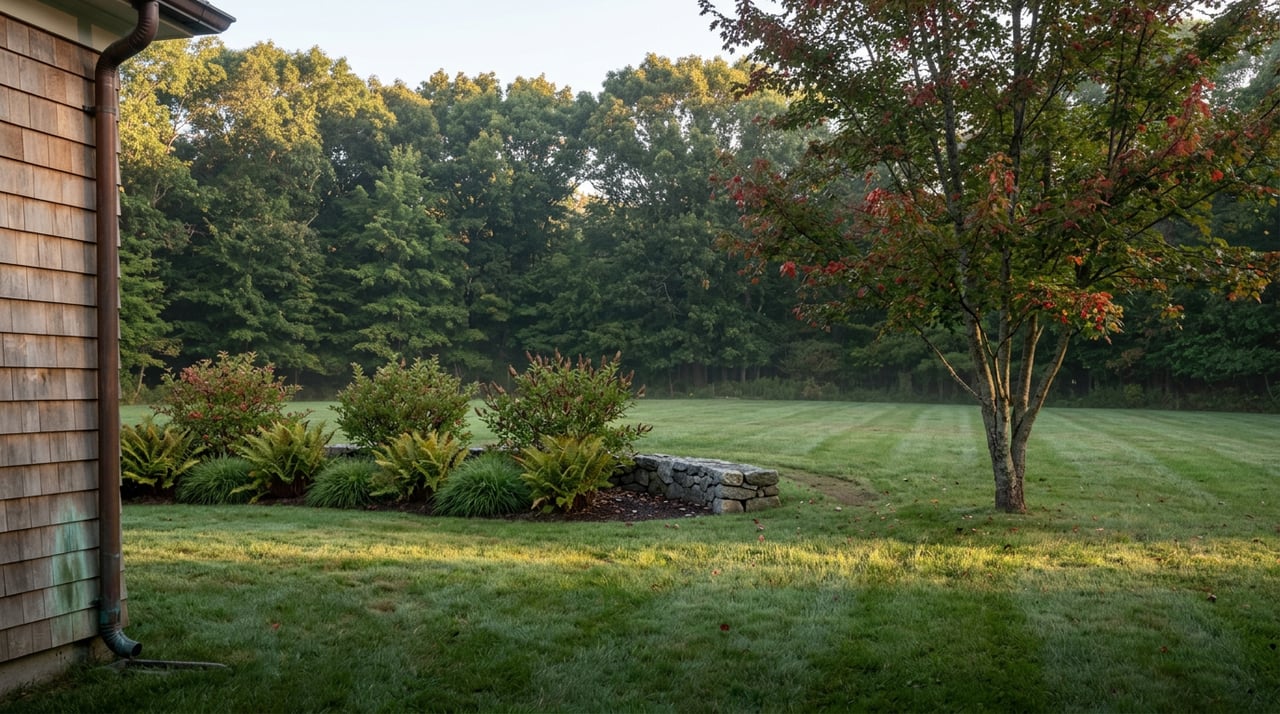
You closed on the house in June. The inspection came back clean, the survey matched the deed, and your closing attorney handled the conveyance tax without a hitch. Then you called a pool contractor, or a dock builder, or the person who does additions with a mudroom and a spot for kayaks, and you found out the calendar you'd been picturing has nothing to do with the calendar you're actually on.
In Darien, the paperwork that matters most for renovation projects rarely shows up in a title search. It shows up on a Wednesday night agenda at Town Hall, in front of a board most buyers have never heard of.
Darien's Environmental Protection Commission is a town board of seven regular members, who must be electors of the town, joined by three nonvoting ex officio members: the first selectman, the superintendent of public works, and the chairman of the Planning and Zoning Commission. They meet at Town Hall, in Room 206, and their agendas are posted online days ahead of each session.
What lands on that agenda is broader than most new owners expect. Pull a recent one and you'll find a residential addition and hardscape at 53 Noroton Avenue, a deck and patio at 40 Relihan Road, a pool terrace expansion with tree removal and fence repair at 43 Blueberry Lane, and a driveway and pergola project at 74 Pembroke Road. None of these are waterfront estates. They're ordinary Darien lots that happen to sit near a stream, a pond edge, or a mapped wetland, which is a large share of the town given how much of Darien's interior is threaded with watercourses feeding toward the Sound.
If your renovation touches ground near any of that, this board, not your contractor's permit application, sets the real schedule.
Here's the number that actually decides which track you're on. In an October 2024 Planning and Zoning Commission decision involving a dock project, the commission noted the property was more than 100 feet from the Five Mile River and had no inland wetlands on site or within 50 feet of the property line, and for that reason EPC review and action were not required.
That distance, roughly 50 feet from a wetland or watercourse, is the quiet threshold running underneath a huge share of Darien renovation timelines. Cross it, and a pool, patio, addition, or dredged pond becomes a matter for the EPC. Stay outside it, and your project moves through the standard building permit process on the standard building department clock. Two houses on the same street can land on opposite sides of that line depending on where a stream happens to run.
Most buyers never ask this question during due diligence, because it doesn't show up on a standard home inspection and rarely comes up in a listing description. It surfaces the week you file for your own permit.
Not every EPC application moves at the same speed. Recent town agendas show applications labeled Acceptance, Discussion, or Resolution, procedural stages a project moves through as staff and commissioners work through it, often across more than one meeting.
Then there's the other track. A January 2026 agenda item for 30 Plymouth Road, a proposal for a new two story attached garage, driveway, in ground pool, patio, and pergola, sited in a special flood hazard area and proximate to wetlands and watercourses, was marked for a full Public Hearing rather than routine acceptance. Larger scope, flood hazard overlay, and wetlands proximity together pushed it into the track that involves formal public notice and a hearing date, not just a commission review at a regular meeting.
If your project resembles that one in scope or setting, budget for a hearing, not just a review. If it resembles the deck at 40 Relihan Road or the pool house and patios at 1 Pilgrim Road, the path may move faster, but it still starts with an application to a board most people never budgeted time for.
Waterfront lots along Scott's Cove, Long Neck Point, Tokeneke, and the harbors near Pear Tree Point carry an additional layer entirely separate from the town's EPC. Anything built waterward of the coastal jurisdiction line, meaning a dock, pier, or float, falls under Connecticut DEEP review, and that review runs on its own clock.
A streamlined General Permit dock is generally issued within three months. An individual Structures, Dredging and Fill permit, the track required when tidal wetland vegetation is present at the site, typically takes six to twelve months. Routine maintenance or a minor dock modification can often move through a Certificate of Permission, which completes in a maximum of 90 days. None of these timelines run concurrently with the town's EPC process. They stack on top of it.
Sometimes the calendar isn't the obstacle. The property rights are.
A dock application at Scott's Cove, on Contentment Island Road, took six years to resolve, from an initial 2005 submission to a final supplemental decision in February 2011. The delay wasn't procedural friction. The access parcel the applicant needed to cross was encumbered by an Open Space Declaration and a Conservation Easement granted years earlier to the town, and when the dock was proposed, objections were raised that the project conflicted with the intent of that easement. The case worked through a state hearing, tentative approval, public notice in the Darien Times, and a revised design before it was finally resolved.
The Land Trust of Darien, which holds roughly 230 acres across the town according to its executive director's own account at a 2025 Planning and Zoning meeting, is a name worth knowing before you fall in love with a waterfront parcel. Conservation easements attached to a neighboring or shared access parcel can limit or block a dock regardless of what the town or the state would otherwise allow. That kind of restriction won't appear in a standard title search unless someone is specifically looking for it.
None of this means Darien renovation projects near water are impossible. Most of the projects on any given EPC agenda get approved. What it means is that the sequence matters more than buyers usually assume.
Before you write a contingency into an offer, or sign a contract with a pool builder assuming a spring start, it's worth having your real estate attorney or a wetlands consultant check the specific distance from your lot line to the nearest mapped wetland or watercourse. If you're inside that roughly 50 foot zone, build the EPC's calendar into your renovation plan from day one, not after the contractor tells you your permit is stuck. If a dock is part of the vision, ask early whether any part of the access route carries a conservation easement, and confirm which DEEP permit track your project falls under before you budget a summer completion.
The town posts EPC agendas and application status through its online permitting system, and reviewing a few recent agendas before you make an offer will tell you more about a lot's renovation timeline than almost anything else available before closing.
How do I find out if my specific lot is within the EPC's review distance? The town's Inland Wetlands and Watercourses Map, maintained by the Environmental Protection Commission, shows mapped wetlands and watercourses across Darien. A wetlands consultant or your closing attorney can confirm the exact distance from your property line during due diligence.
Does every pool or addition near water require a public hearing? No. Most applications move through routine review stages such as acceptance, discussion, and resolution. Public hearings are typically reserved for larger projects or those sited in a special flood hazard area, as with the 30 Plymouth Road application.
If I want to build a new dock, who do I need approval from? Both the town, through the EPC if the site is within its jurisdiction, and the state, through Connecticut DEEP if any part of the structure sits waterward of the coastal jurisdiction line. The two reviews run separately and rarely overlap in timing.
Buying near water in Darien means buying into a layered approval process most listings never mention. If you're weighing a property with a stream, pond, or shoreline in play, Angela Alfano can walk the timeline with you before you write an offer, not after your contractor calls with bad news. Book a consultation to talk through what a specific property's renovation calendar actually looks like.
Whether you are selling one of the mid-size single-family homes in Fairfield County or a luxurious acreage estate, Angela has garnered a reputation for being personable, friendly, and willing to go above and beyond to ensure her clients get the possible outcomes. Her goal is always to exceed client expectations.